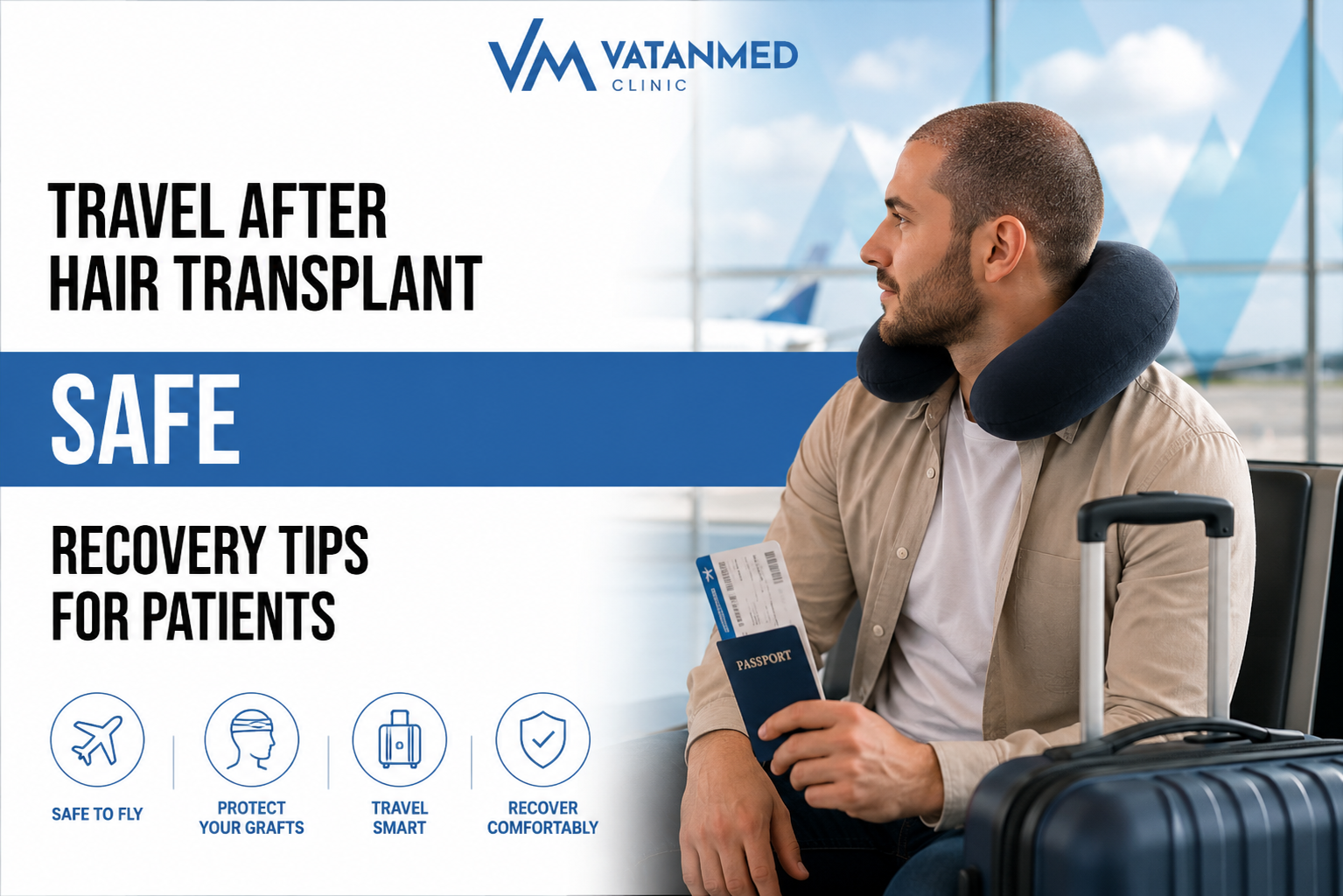
Travel after hair transplant is possible for many patients, but it should always be planned carefully. This is especially important for international patients who visit a clinic in another city or country and need to return home after the procedure. The first days after treatment are part of the recovery process, and the scalp needs protection from rubbing, pressure, sweating, accidental contact, and poor aftercare habits.
A hair transplant is a medical procedure, not just a cosmetic appointment. During the first stage of recovery, the implanted grafts are delicate, the donor area may feel sensitive, and the scalp is still healing. Because of this, travel after hair transplant should be discussed with the clinic before the procedure, not only on the day of departure.
At VatanMed, patients can learn more about hair transplant services. VatanMed supports patients across international clinic locations, with its main branch in Istanbul and services including hair, beard, moustache, and eyebrow transplantation.
This guide explains when patients may travel after hair transplant, what to avoid during the journey, how to protect the grafts, what to ask before flying, and why aftercare communication matters.
Travel after hair transplant also matters for international patients because flying, luggage, hotel transfers, and airport movement can affect comfort during the early recovery period.
Why Travel After Hair Transplant Needs Careful Planning
Travel after hair transplant needs careful planning because the scalp is still healing during the early recovery period. The implanted grafts must be protected from pressure, rubbing, scratching, sweating, and trauma. The donor area also needs time to calm down after extraction.
The NHS explains that patients need to be very careful with transplanted hair during the first two weeks after a hair transplant and that grafts are not secure in the early recovery period. You can read the NHS hair transplant guidance.
This does not mean that every patient must stay near the clinic for two full weeks. However, it does mean that travel should be organised responsibly. A rushed journey, heavy luggage, crowded airport, tight hat, or uncomfortable sleeping position can make recovery more difficult.
Travel after hair transplant can create avoidable risks such as:
- Accidentally touching or rubbing the grafts
- Sweating heavily during travel
- Bumping the scalp during airport security or transport
- Carrying heavy luggage too soon
- Sleeping with pressure on the transplanted area
- Forgetting aftercare instructions
- Not knowing who to contact if symptoms appear
Patients should ask the clinic directly when it is suitable for them to travel after hair transplant, because advice can vary depending on graft number, technique, treatment area, swelling, healing response, and individual health.
When Can You Travel After Hair Transplant?
The safest answer is to follow your clinic’s specific advice. Some patients may be able to travel shortly after the procedure, while others may be advised to stay nearby for a little longer, especially if the treatment was extensive or if an early follow-up or first wash is recommended.
Travel after hair transplant should be planned around recovery, not only around flights, hotels, or work schedules. The procedure may be finished, but healing has only just started.
Before travelling, patients should consider:
- How long the procedure takes
- Whether swelling is expected
- Whether the first wash will be done at the clinic
- How far they need to travel
- Whether the journey includes flying, driving, train, or bus travel
- Whether they will travel alone
- Whether they need to carry luggage
- Whether they can rest properly after arriving home
If possible, many patients prefer to allow at least a short recovery window before a long journey. This gives the scalp time to settle and allows the clinic to check the early healing stage.
Patients who want to discuss travel timing with VatanMed can contact the team through the Contact Us.
Can You Fly After a Hair Transplant?
Many international patients fly after a hair transplant. Flying itself is not automatically forbidden for every patient, but it must be planned carefully. The biggest concerns are usually not the airplane itself, but the full travel process: airport movement, fatigue, luggage, sweating, pressure on the scalp, and accidental contact with the grafts. For this reason, travel after hair transplant should be discussed before booking flights, especially if the patient needs a long journey home.
Before flying, patients should ask the clinic for individual travel advice. Long-haul flights, airport transfers, overnight journeys, and crowded terminals may all affect comfort during early recovery.
Questions to ask before flying after a hair transplant:
- When can I safely fly after the procedure?
- Should I stay for the first wash?
- Can I wear a loose hat or covering?
- How should I sleep on the flight?
- Can I carry luggage?
- What should I do if swelling increases?
- Who should I contact after arriving home?
Patients should avoid placing bags into overhead compartments if this risks stretching, sweating, or accidentally bumping the scalp. If travelling alone, it may be better to use light luggage or ask for assistance.
The American Society of Plastic Surgeons provides general recovery information for hair transplantation. Recovery guidance is important because the procedure is only one part of the full treatment journey.
What to Avoid During Travel After Hair Transplant
During travel after hair transplant, patients should focus on protecting the scalp. The implanted area should not be rubbed, scratched, pressed, or exposed to unnecessary irritation. Even a small accidental knock can cause stress during the early recovery stage.
Patients should usually avoid:
- Touching the grafts
- Wearing tight hats
- Dragging heavy luggage
- Sweating heavily
- Rushing through airports
- Sleeping with pressure on the implanted area
- Direct sun exposure
- Picking scabs
- Using unapproved sprays or products
- Swimming or using saunas
- Drinking alcohol if the clinic has advised against it
- Ignoring medication instructions
Patients should also avoid crowded situations where the head could be accidentally bumped. This is especially relevant in airports, buses, trains, hotel transfers, and busy transport areas.
The goal is not to create fear. The goal is to protect the grafts and make the recovery process smoother.
Should You Stay for the First Wash?
Some clinics recommend that patients stay until the first wash or early check-up. This can be helpful because the team can show how the scalp should be cleaned and answer early recovery questions.
The first wash is important because patients may feel nervous about touching the scalp. If washing is done too aggressively, it may irritate the grafts. If washing is avoided completely, scabs may become uncomfortable. The clinic’s guidance should be followed carefully.
If you travel before the first wash, ask for clear instructions about:
- When to begin washing
- How to apply lotion or foam if advised
- How to rinse the scalp
- What water pressure to use
- What shampoo is suitable
- When scabs should start clearing
- What symptoms should be reported
Patients can review general questions on VatanMed’s FAQ page.
How to Sleep During Travel After a Hair Transplant
Sleeping position matters after a hair transplant. In the early days, patients may be advised to sleep with the head elevated to reduce swelling and avoid pressure on the transplanted area.
During travel, this can be difficult. If flying or travelling by car, patients should try to keep the head protected and avoid leaning the recipient area against windows, seats, or headrests in a way that causes rubbing.
Useful travel preparation may include:
- Using a clean travel pillow if approved by the clinic
- Keeping the head elevated where possible
- Avoiding pressure on the grafts
- Choosing a comfortable seat when possible
- Planning rest after arrival
- Avoiding overnight journeys if they create discomfort
Patients should ask the clinic what sleeping position is best for their specific case.
Swelling During Travel After Hair Transplant
Some patients experience swelling after a hair transplant. Swelling may appear around the forehead or eyes, depending on the procedure and individual healing. This can feel worrying, especially when travelling, but mild swelling can be part of recovery.
Patients should ask the clinic what swelling is expected and what signs require attention. They should also follow instructions about sleeping position, medication, hydration, and activity levels.
Contact the clinic if swelling is:
- Severe
- Painful
- Increasing instead of improving
- One-sided and unusual
- Associated with fever or discharge
- Causing concern during travel
The NHS advises contacting the clinic as soon as possible if severe pain or unexpected symptoms occur after a hair transplant. You can review the NHS page.
Travelling Abroad for a Hair Transplant
Patients travelling abroad for a hair transplant should plan carefully before booking. The clinic, procedure, aftercare, travel schedule, accommodation, and communication should all be clear.
International patients should not focus only on the treatment day. They should think about consultation, arrival, procedure, early recovery, travel home, and follow-up communication.
H3: Before travelling abroad for a hair transplant, confirm:
- Consultation details
- Estimated treatment plan
- Whether the clinic has reviewed photos
- How long you should stay
- Whether hotel or transfer support is included
- When the first wash or follow-up happens
- What aftercare instructions are provided
- Who to contact after returning home
- What to do if complications occur
- Whether travel insurance is needed
VatanMed serves patients across multiple international clinic locations. Patients can explore available locations through the Branches page.
Why Aftercare Communication Is Important
Aftercare does not end when the patient leaves the clinic. Recovery continues for weeks, and growth develops over months. For international patients, communication is especially important because they may not be able to visit the clinic easily after returning home.
Good aftercare communication should be clear, practical, and easy to follow. Patients should know who to contact and when to send photos if follow-up is needed.
Good aftercare communication should include:
- Clear written instructions
- Photos or videos if needed
- Contact details for questions
- Guidance on washing and sleeping
- Advice on medication if prescribed
- Warning signs to watch for
- Follow-up recommendations
- Growth timeline expectations
The International Society of Hair Restoration Surgery provides patient education and safety information. Patients should always choose clinics that take aftercare and communication seriously, not only the procedure itself.
Can Travel Affect Hair Transplant Results?
Travel itself does not automatically damage the result. However, poor travel behaviour during the early recovery period can create risks. For example, rubbing the scalp, wearing a tight hat, carrying heavy luggage too soon, sweating heavily, or failing to follow aftercare instructions may affect comfort and healing.
The quality of the procedure, graft handling, donor area planning, implantation, aftercare, and individual healing all matter. Travel after hair transplant should be arranged to support recovery rather than interfere with it.
Travel after hair transplant should always be planned around recovery, because the first days after treatment are important for protecting the grafts and avoiding unnecessary irritation.
Patients should remember that the final result takes time. Shedding may occur in the first weeks, and new growth usually develops gradually over months.
What Should You Pack for Travel After Hair Transplant?
Patients should ask the clinic what to bring, but it is useful to prepare practical items before travelling. This helps reduce stress and makes the journey more comfortable.
Useful items may include:
- Clinic aftercare instructions
- Medication if prescribed
- Loose button-up or zip-up clothing
- Clean travel pillow if approved
- Water
- Light snacks for the journey
- Sun protection that does not touch the grafts
- Contact details for the clinic
- Travel documents
- A loose hat only if approved by the clinic
Button-up or zip-up tops can be helpful because they reduce the need to pull clothing over the scalp.
Long-Haul Travel After Hair Transplant
Long-haul flights require extra planning. Patients may be seated for many hours, may sleep awkwardly, and may need to move through busy airports. Long flights should be discussed with the clinic before treatment.
Patients travelling from the USA, UK, EU, Middle East, Central Asia, Africa, or other regions should plan recovery time, not just flight time.
For long-haul travel, patients may want to consider:
- Staying near the clinic a little longer before flying
- Choosing a comfortable seat
- Avoiding tight headwear
- Keeping aftercare items accessible
- Walking carefully during connections
- Avoiding alcohol if advised
- Drinking water
- Resting after arrival
- Avoiding work immediately after long travel
Can I Travel Alone After a Hair Transplant?
Some patients travel alone, but having support can make recovery easier. A companion can help with transport, luggage, communication, and avoiding unnecessary stress.
If travelling alone, patients should keep luggage light and avoid rushing. They should also make sure they understand all aftercare instructions before leaving the clinic.
Patients should not be embarrassed to ask airport or hotel staff for help if needed. Protecting the scalp is more important than carrying everything alone.
Questions to Ask Before Travelling Home
Before leaving the clinic, patients should ask clear questions. This reduces anxiety and helps them feel more confident during travel.
Important questions include:
- When can I travel?
- Can I fly safely in my case?
- Do I need to stay for the first wash?
- How should I protect the grafts during travel?
- Can I wear a hat?
- How should I sleep during the journey?
- Can I carry luggage?
- What symptoms should I report?
- Who do I contact after returning home?
- When should I send progress photos?
These questions help make the recovery journey smoother and safer.
Frequently Asked Questions
Can I fly after a hair transplant?
Many patients can fly after a hair transplant, but timing should be confirmed by the clinic. The main concerns are protecting the grafts, avoiding pressure, reducing stress, and following aftercare instructions.
How soon can I travel after a hair transplant?
This depends on the patient, procedure, travel distance, and clinic advice. Some patients travel shortly after treatment, while others may be advised to stay longer for early checks or first wash.
Can I wear a hat while travelling after a hair transplant?
Only if the clinic says it is safe. Tight hats may rub or press on grafts. If allowed, the covering should usually be loose and clean.
Can travel damage my hair transplant?
Travel itself does not automatically damage the transplant, but poor protection during travel can create risks. Avoid rubbing, scratching, heavy luggage, sweating, and pressure on the grafts.
Should I stay near the clinic after the procedure?
Many patients benefit from staying at least long enough for early recovery guidance or first wash, depending on the clinic’s recommendation and travel distance.
What should I do if I have a problem after travelling home?
Contact the clinic as soon as possible. Do not rely only on online advice, especially if you have severe pain, discharge, fever, worsening redness, or unexpected symptoms.
Final Thoughts
Travelling after a hair transplant is possible for many patients, but it should be planned carefully. The early recovery period is important, and the scalp needs protection from pressure, rubbing, sweating, trauma, and poor aftercare habits.
The best approach is to discuss travel before the procedure, follow the clinic’s instructions, stay informed about recovery, and keep communication open after returning home.
If you are planning a hair transplant and need advice about travelling before or after treatment, contact VatanMed for personalised guidance.