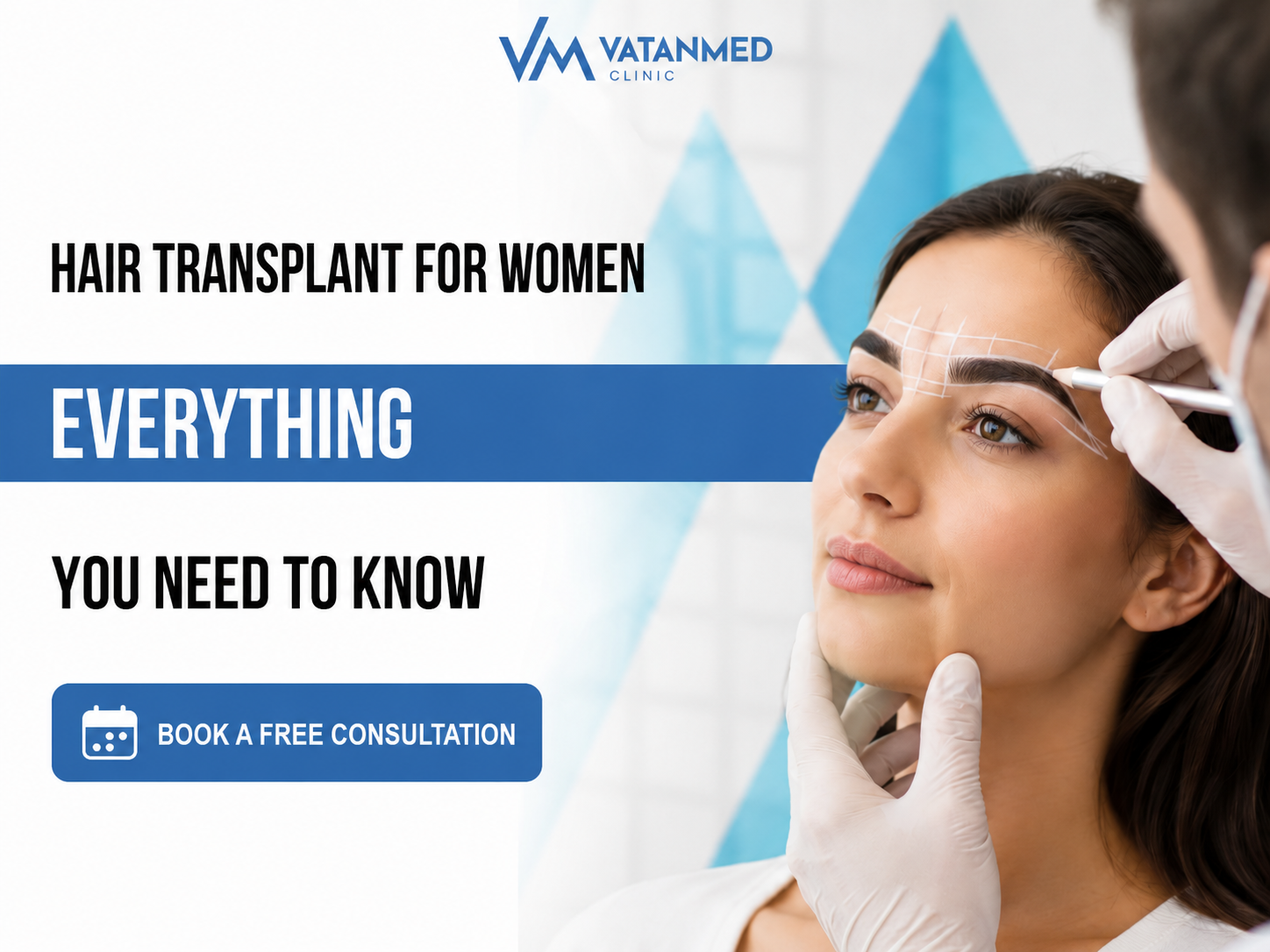
Eyebrow transplant treatment may be an option for selected patients who want to restore thin, patchy or missing eyebrow hair. Eyebrows have an important role in facial expression, balance and appearance, so even small changes in eyebrow shape or density can affect the way the face looks.
An eyebrow transplant works by moving hair follicles from a donor area, commonly the scalp, into carefully planned eyebrow areas. However, eyebrow restoration is not simply about adding more hair. It requires precise design, correct graft direction, suitable donor hair, careful placement and realistic expectations.
Some patients want fuller brows after years of over-plucking. Others may have naturally sparse eyebrows, patchy growth, scarring, trauma-related loss or thinning linked with medical or hormonal factors. Because the cause and pattern can be different, an eyebrow transplant should always begin with consultation and assessment.
At VatanMed, patients can learn more about hair transplant services before deciding whether treatment may be suitable. VatanMed provides transplantation services for the head, beard, moustache and eyebrow areas, with international clinic locations and its main branch in Istanbul.
This guide explains who may be suitable for an eyebrow transplant, how eyebrow design is planned, why donor area assessment matters, what recovery may involve and what results patients should realistically expect.
What Is an Eyebrow Transplant?
An eyebrow transplant is a hair restoration procedure where hair follicles are moved into the eyebrow area to improve shape, density or coverage. The donor hair is usually taken from an area where hair is suitable for transplantation, often from the scalp donor region.
The procedure follows the same general principle as other hair transplant treatments: follicles are extracted from a donor area and implanted into the area needing restoration. However, eyebrow work is highly detailed because the eyebrow is small, visible and has a very specific natural growth direction.
The NHS hair transplant guide explains that hair transplant surgery involves moving hair to an area that is thin or bald. In eyebrow restoration, this principle is adapted to the eyebrow area, where design and angle control are especially important.
An eyebrow transplant may help improve:
- Thin eyebrow density
- Patchy eyebrow growth
- Missing sections of the brow
- Scarring in selected cases
- Over-plucked eyebrows
- Uneven eyebrow shape
- Overall facial balance and expression
A successful eyebrow transplant should aim for natural-looking improvement, not an overly dense or artificial eyebrow shape.
Who May Be Suitable for Eyebrow Transplant?
A suitable candidate for an eyebrow transplant is usually someone with stable eyebrow thinning or loss, a suitable donor area, healthy skin in the eyebrow region and realistic expectations about the result.
Some patients may be suitable because their eyebrows have become sparse from over-plucking, ageing, genetics or previous trauma. Others may need further medical assessment first, especially if eyebrow loss is sudden, active or linked with an untreated skin or medical condition.
Suitability should never be based only on the desire for thicker eyebrows. The clinic must assess the cause of eyebrow thinning, the condition of the skin, the donor area and whether the desired eyebrow design is realistic.
A possible candidate may have:
- Stable thin or patchy eyebrows
- Over-plucked eyebrows that have not regrown well
- Scarring or trauma-related eyebrow loss in selected cases
- A suitable donor area
- Healthy eyebrow skin
- Realistic expectations about density and maintenance
- Willingness to follow aftercare instructions
A responsible eyebrow transplant plan should be recommended only after consultation and individual assessment.
Common Causes of Thin or Patchy Eyebrows
Thin or patchy eyebrows can happen for many reasons. Some patients naturally have sparse brows, while others lose eyebrow density over time. Over-plucking is a common reason, especially when repeated hair removal damages the normal growth pattern or the brows do not regrow fully.
Other causes may include ageing, genetics, skin conditions, thyroid-related issues, nutritional factors, trauma, scarring, burns, medication-related shedding or alopecia areata. Because the possible causes vary, diagnosis and medical history are important before planning an eyebrow transplant.
The NHS hair loss guide explains that hair loss may be temporary or permanent and can sometimes be linked with illness, stress, weight loss or iron deficiency. This is why patients should not assume that every type of eyebrow thinning is suitable for immediate surgery.
Eyebrow thinning may be linked to:
- Over-plucking or repeated waxing
- Genetics
- Age-related thinning
- Scarring or trauma
- Burns or previous surgery
- Skin inflammation
- Alopecia areata
- Hormonal or thyroid-related issues
- Nutritional deficiencies in some cases
Before an eyebrow transplant, the clinic should understand whether the eyebrow loss is stable and whether transplantation is appropriate.
When Eyebrow Transplant May Not Be the First Option
An eyebrow transplant may not be the best first option if eyebrow hair loss is sudden, active, unexplained or linked with untreated skin disease. If the cause is still changing, surgery may be poorly timed.
For example, patients with active alopecia areata, inflamed skin, untreated dermatitis, infection or ongoing shedding may need medical review before transplantation is considered. Healthy skin is important because implanted grafts need a stable environment for healing.
The American Academy of Dermatology hair loss diagnosis guide explains that effective hair loss treatment begins with identifying the cause. This is especially important for eyebrow loss because thinning may sometimes reflect a wider medical or dermatological issue.
Treatment may need to wait if:
- Eyebrow loss is sudden
- The cause has not been assessed
- There is active inflammation or infection
- There is untreated skin disease in the brow area
- Hair loss is still progressing
- The donor area is weak or unsuitable
- The patient expects unrealistic density or shape
A safe eyebrow transplant plan should protect the patient from unsuitable or unnecessary treatment.
How Eyebrow Design Is Planned
Eyebrow design is one of the most important parts of an eyebrow transplant. The eyebrows are central to facial expression, so shape, thickness and symmetry must be planned carefully.
A natural eyebrow is not a flat block of hair. It has a beginning, arch and tail. Hair direction changes across the eyebrow, and the density usually varies from one section to another. A design that is too thick, too straight or too sharply drawn may look artificial.
During consultation, the clinic should consider the patient’s face shape, eye position, natural brow pattern, desired style, age and donor hair characteristics. The aim is to create a design that looks natural and suits the individual face.
Eyebrow design should consider:
- Face shape
- Eye position and facial balance
- Natural eyebrow pattern
- Beginning, arch and tail of the brow
- Symmetry without making the brows look artificial
- Thickness and density goals
- Hair direction and angle
- Long-term maintenance expectations
Patients can read more about natural planning principles here: Hairline Design Hair Transplant: Why Natural Planning Matters.
Why Graft Direction Is Critical in Eyebrow Transplant
Graft direction is especially important in an eyebrow transplant. Eyebrow hairs grow at very shallow angles and change direction across the brow. If grafts are placed at the wrong angle, the result may look unnatural even if the grafts grow successfully.
The inner brow, arch and tail may all need different direction planning. The clinic must place grafts with careful attention to the natural flow of eyebrow hair. This is one of the reasons eyebrow restoration requires precision and experience.
Correct graft direction also affects how the eyebrows sit, how they can be shaped and how natural they look in everyday facial expression.
Natural eyebrow results depend on:
- Correct graft angle
- Natural direction of eyebrow growth
- Soft density transition
- Careful placement in the brow head, arch and tail
- Suitable donor hair selection
- Symmetry and facial balance
- Proper aftercare and healing
The International Society of Hair Restoration Surgery patient education page provides patient information about hair restoration and supports informed decision-making before treatment.
Donor Area Assessment for Eyebrow Transplant
The donor area is essential in eyebrow transplant planning. Donor hair is commonly taken from the scalp, but the clinic must select hair that is suitable for the eyebrow area. The goal is to choose follicles that can help create a natural appearance.
Scalp hair may grow differently from natural eyebrow hair. This means transplanted eyebrow hair may need trimming and maintenance after it grows. Patients should understand this before treatment.
The clinic should assess donor density, hair thickness, hair texture, scalp condition and safe graft availability. Donor hair is limited, so it must be used carefully and responsibly.
Donor area assessment may include:
- Donor density
- Hair thickness and texture
- Suitability of donor hair for eyebrows
- Safe graft availability
- Scalp health
- Previous procedures
- Risk of overharvesting
Patients can learn more about donor safety here: Donor Area Hair Transplant: Key Checks.
How Many Grafts Are Needed for Eyebrow Transplant?
The number of grafts needed for an eyebrow transplant depends on the size of the thin area, the patient’s existing eyebrow hair, desired density, eyebrow shape and donor hair quality. There is no single graft number that applies to every patient.
A small patch may require fewer grafts than full eyebrow reconstruction. Some patients only need the tail of the brow improved, while others need more density throughout the full eyebrow.
More grafts do not always mean a better result. The right number is the number that supports a natural shape, correct direction and realistic density.
Graft number may depend on:
- Existing eyebrow density
- Size of the missing or thin area
- Desired eyebrow shape
- Donor hair quality
- Whether one or both eyebrows need treatment
- Skin condition
- Realistic density goals
Patients can learn more about graft planning here: How Many Grafts Hair Transplant Patients May Need.
Eyebrow Transplant Techniques
An eyebrow transplant may involve modern hair transplant techniques such as FUE or DHI depending on the patient’s case and clinic planning. The technique should be chosen after consultation, not only because a method sounds advanced.
In eyebrow restoration, placement precision is very important because the eyebrow area is small and highly visible. The clinic must focus on natural angle, correct direction, suitable graft selection and careful density planning.
Technique alone does not guarantee a natural result. The final appearance depends on design, donor hair selection, graft handling, implantation angle, healing and long-term maintenance.
Technique choice may depend on:
- Number of grafts needed
- Eyebrow design
- Skin condition
- Donor hair quality
- Level of detail required
- Recovery expectations
- Clinic assessment
Patients can compare common methods here: Sapphire FUE vs DHI: 7 Key Differences.
Recovery After Eyebrow Transplant
Recovery after an eyebrow transplant may include redness, mild swelling, sensitivity, small scabs and temporary shedding. Because the treated area is on the face, patients should understand the recovery process before treatment.
Patients may need to avoid touching, rubbing, scratching, applying makeup too early or using unapproved skincare products on the treated area. The clinic should provide clear washing and aftercare instructions.
The American Society of Plastic Surgeons hair transplant recovery guide provides general recovery information after hair transplantation. Patients should always follow the specific instructions given by their own clinic.
Recovery may involve:
- Temporary redness
- Mild swelling or sensitivity
- Small scabs around grafts
- Careful washing instructions
- Avoiding rubbing or scratching
- Temporary shedding
- Gradual regrowth over several months
Patients can read more about general recovery here: Hair Transplant Recovery Timeline: What to Expect Month by Month.
When Do Eyebrow Transplant Results Grow?
An eyebrow transplant does not create final density immediately. Some transplanted hairs may shed in the early weeks before new growth begins later. This can feel concerning, but temporary shedding may be part of the normal recovery process.
New growth usually develops gradually. Early hairs may look fine or uneven at first, then improve over time. Final appearance depends on graft survival, hair thickness, placement, skin healing and individual biology.
Patients should avoid judging the final result too early. Eyebrow restoration needs time to settle, grow and blend with the natural brow pattern.
Growth may develop through stages:
- First days: early healing, redness and sensitivity
- First weeks: scabs clear and shedding may occur
- Months 3–4: early regrowth may begin in some patients
- Months 5–9: density may become more visible
- 12 months or later: result maturity becomes clearer
Patients can learn more about shedding here: Shock Loss After Hair Transplant: Is It Normal?.
Maintenance After Eyebrow Transplant
Maintenance is an important part of eyebrow transplant expectations. Because donor hair often comes from the scalp, transplanted eyebrow hairs may grow longer than natural eyebrow hair. Patients may need to trim and shape the brows regularly.
This does not mean the procedure has failed. It is part of understanding how transplanted follicles behave. The clinic should explain grooming expectations before treatment so patients are prepared.
Good maintenance can help the final result look cleaner and more natural. Patients should wait until the clinic confirms it is safe before trimming, shaping or applying products after surgery.
Maintenance may include:
- Regular trimming once fully healed
- Gentle shaping when advised
- Avoiding harsh plucking early after treatment
- Following clinic guidance on makeup and skincare
- Monitoring growth direction and density
- Contacting the clinic if concerns appear
A realistic eyebrow transplant plan should include both the procedure and long-term care.
Eyebrow Transplant at VatanMed
At VatanMed, eyebrow transplant planning should begin with consultation, donor area assessment, eyebrow design and realistic expectation setting. The goal is to support a natural-looking eyebrow result while protecting the donor area.
VatanMed provides hair transplantation services for the head, beard, moustache and eyebrow areas. Patients can learn more through the official VatanMed website.
A personalised approach may include reviewing the patient’s eyebrow shape, skin condition, donor hair quality, graft needs, technique suitability and recovery expectations before treatment is recommended.
VatanMed’s planning approach may include:
- Eyebrow thinning assessment
- Donor area review
- Eyebrow shape planning
- Graft direction and angle planning
- Graft number estimation
- Technique recommendation after assessment
- Recovery and aftercare guidance
- Realistic expectation setting
Patients can explore clinic locations through the VatanMed Branches page or contact the team through the Contact Us page.
Frequently Asked Questions
Who is suitable for an eyebrow transplant?
An eyebrow transplant may be suitable for selected patients with stable thin or patchy eyebrows, a suitable donor area, healthy skin and realistic expectations. Consultation is needed before treatment.
Can eyebrow transplant fix over-plucked eyebrows?
It may help in suitable cases where over-plucked eyebrows have not regrown well. The result depends on skin condition, donor hair quality, design planning and graft placement.
Where does the donor hair come from?
Donor hair is commonly taken from the scalp donor area. The clinic must assess whether the donor hair is suitable for eyebrow restoration.
Does eyebrow transplant look natural?
An eyebrow transplant can look natural when eyebrow design, graft direction, density and donor hair selection are planned carefully.
Will transplanted eyebrow hair need trimming?
Yes, it may need trimming because transplanted hair often comes from the scalp and may grow longer than natural eyebrow hair. Patients should follow clinic guidance on when trimming is safe.
How long does eyebrow transplant recovery take?
Early healing may take days to weeks, while growth and density develop gradually over several months. Final results may take much longer than the first recovery stage.
Final Thoughts
Eyebrow transplant treatment may be valuable for selected patients who want to improve thin, patchy or missing eyebrow hair. However, the procedure must be planned carefully because the eyebrow area is highly visible and detailed.
The safest approach includes consultation, cause assessment, donor area review, eyebrow design, graft direction planning, realistic density goals, technique selection after assessment and clear aftercare guidance.
Because every patient’s eyebrow shape, donor area and expectations are different, personalised consultation is essential. This article is for general information and does not replace medical advice.
For personalised guidance, contact VatanMed or visit the Branches page to find the most suitable clinic location for you.
Contact VatanMed here: https://vatanmed.com/contact-us/.