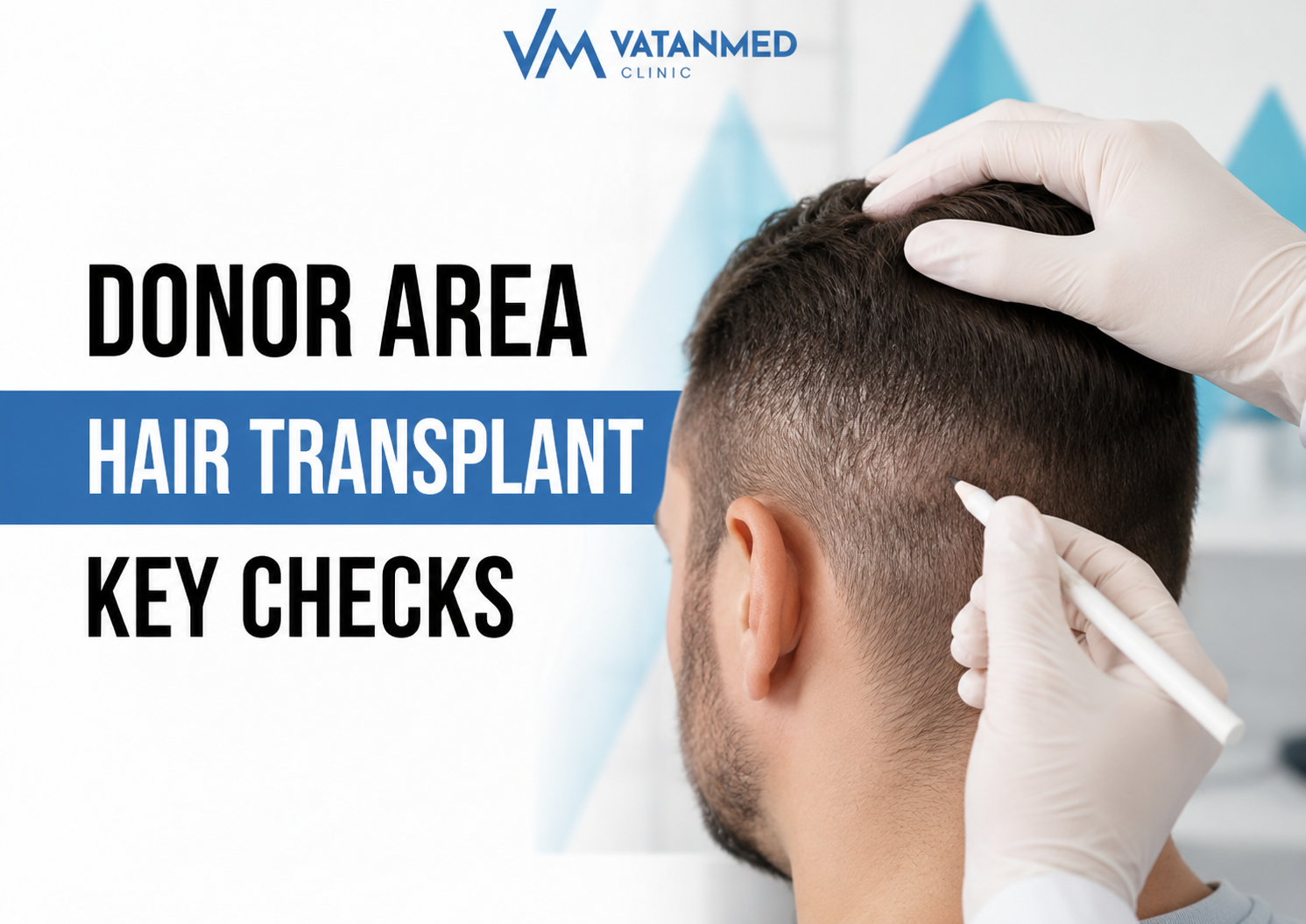
Donor area hair transplant assessment is one of the most important steps before any hair restoration procedure. Many patients focus on the hairline, the number of grafts or the final result, but the donor area is what makes the treatment possible in the first place.
A proper donor area hair transplant assessment helps the clinic understand whether the patient has enough safe donor hair for a natural and balanced result.
The donor area is the part of the scalp where hair follicles are taken from before being implanted into thinning or bald areas. In most hair transplant procedures, this area is located at the back and sides of the head. These hairs are often more resistant to genetic hair loss, which is why they are commonly used for transplantation.
A successful donor area hair transplant plan should protect the donor region while also providing enough grafts to improve the recipient area. If the donor area is assessed poorly, patients may risk low density, overharvesting, uneven donor appearance or unrealistic expectations.
At VatanMed, patients can learn more about hair transplant services before deciding whether treatment may be suitable. VatanMed provides hair transplantation services for the head, beard, moustache and eyebrow areas, with international clinic locations and its main branch in Istanbul.
This guide explains how the donor area is assessed, why donor safety matters, what affects graft count, and why consultation is essential before deciding on a hair transplant.
What Is the Donor Area in a Hair Transplant?
The donor area is the region where grafts are extracted for transplantation. In a typical scalp hair transplant, this is usually the back and sides of the head. The reason this area is used is that the hair follicles there are often more stable than hairs on the front, temples or crown.
In a donor area hair transplant assessment, the clinic checks whether this area has enough healthy follicles to support the planned treatment. This is not only about counting hairs. It is about understanding density, hair thickness, scalp condition, long-term stability and safe extraction limits.
The NHS explains that a hair transplant involves moving hair to an area that is thin or bald. It also explains that FUE involves removing individual hairs one by one from the back of the head and placing grafts into the scalp. You can review the NHS guide here: NHS hair transplant guide.
The donor area usually provides:
- Hair follicles used for transplantation
- Grafts for the hairline, mid-scalp or crown
- More stable hair in suitable patients
- The foundation for natural density planning
- The limit for how much coverage may be realistic
A good donor area hair transplant plan should always respect the fact that donor hair is limited. Once grafts are removed, the clinic must preserve the appearance of the donor region as much as possible.
Why Donor Area Quality Matters
Donor area quality matters because it affects almost every part of the hair transplant plan. It can influence how many grafts may be extracted, which areas can be treated, what density is realistic and whether future procedures may still be possible.
This is why donor area hair transplant planning should always come before discussing final graft numbers or treatment expectations.
A strong donor area can give the clinic more planning flexibility. A weaker donor area may require a more conservative approach. This does not automatically mean treatment is impossible, but it does mean the plan must be realistic and safe.
In donor area hair transplant planning, the goal is not to take the maximum number of grafts at any cost. The goal is to take a safe number of grafts while protecting the donor area and creating a natural-looking result.
Donor area quality may affect:
- Safe graft count
- Hairline design
- Recipient area coverage
- Crown treatment planning
- Overall density expectations
- Risk of donor thinning
- Future hair transplant options
Patients should be careful if a clinic promises a very high graft number without clearly explaining donor area safety. More grafts do not always mean better results.
How Clinics Assess Donor Hair Density
Donor hair density means how many follicular units are available in the donor area. This is one of the key parts of a donor area hair transplant assessment because it helps the clinic estimate how many grafts may be extracted safely.
Density is not the only factor. Hair thickness, colour, curl, scalp contrast and follicle quality also affect how full the final result may look. For example, two patients may have the same number of grafts, but the visual result may be different if one patient has thicker hair.
During donor area hair transplant assessment, the clinic should look at both the quantity and quality of available donor hair.
The clinic may review the donor area visually, through close examination and sometimes with magnification or imaging tools depending on the clinic’s process. The aim is to understand whether the donor area can support the patient’s goals.
A donor density assessment may consider:
- Number of follicular units per area
- Hair shaft thickness
- Single, double and multi-hair graft availability
- Donor scalp health
- Signs of thinning in the donor area
- Previous extraction or scarring
- Hair colour and scalp contrast
Patients can explore VatanMed clinic locations through the VatanMed Branches page if they want to arrange consultation and assessment.
What Affects the Number of Grafts That Can Be Extracted?
The number of grafts that can be extracted depends on the donor area, the size of the recipient area, the patient’s hair type and the long-term treatment plan. A responsible clinic should never choose graft count randomly or only for marketing purposes.
In donor area hair transplant planning, the safest graft number is the number that improves the recipient area without damaging the donor region.
In donor area hair transplant planning, graft count should be based on safe extraction. Taking too many grafts can create visible thinning or patchiness in the donor region. Taking too few grafts may not provide enough improvement in the recipient area. The balance is important.
Patients often ask for a specific graft number, such as 2,000, 3,000 or 4,000 grafts. However, the right number depends on the individual case. It should be calculated after donor assessment and treatment planning.
Graft number may depend on:
- Donor density
- Hair thickness
- Recipient area size
- Hairline position
- Crown involvement
- Technique used
- Previous hair transplant history
- Future hair loss risk
Patients who want to understand how graft planning affects price can also review VatanMed’s cost-related article here: Hair Transplant Cost: Is It a Long-Term Investment?.
Can a Weak Donor Area Still Be Used?
A weak donor area does not always mean that a patient can never have a hair transplant. However, it does mean the plan needs to be more careful. A patient with limited donor hair may need fewer grafts, a smaller treatment area or a more conservative hairline.
In some cases, treatment may not be recommended immediately. The clinic may advise further diagnosis, medical review or a different strategy. This is especially important if thinning affects the donor area itself.
A good donor area hair transplant plan should avoid creating a result that improves the front while damaging the back and sides. The donor area must remain natural-looking after extraction.
A weak donor area may require:
- More conservative graft planning
- Lower density expectations
- Prioritising the hairline over the crown
- Staged treatment planning
- Further medical assessment
- Careful discussion of limitations
- Possible non-surgical management first
The American Academy of Dermatology explains that effective hair loss treatment begins with identifying the cause of hair loss. You can read more here: AAD hair loss diagnosis and treatment guide.
Why Overharvesting Should Be Avoided
Overharvesting means too many grafts are taken from the donor area. This can make the donor area look thin, uneven or patchy. It can also reduce options for future treatment if hair loss continues.
A careful donor area hair transplant plan helps reduce the risk of visible thinning, patchiness or an unnatural donor appearance after surgery.
Overharvesting is one of the main reasons why donor area hair transplant assessment must be taken seriously. A high graft number may sound attractive, but it is not helpful if it harms the donor region or creates an unnatural result.
Hair transplant planning should always consider the long term. A patient may need future treatment if native hair continues to thin. If too much donor hair is used in the first procedure, future options may be limited.
Signs of poor donor planning may include:
- Patchy donor appearance
- Visible thinning after extraction
- Uneven extraction pattern
- Too many grafts taken in one area
- Reduced future treatment options
- Donor area looking unnatural with short hair
The International Society of Hair Restoration Surgery provides patient education and promotes high standards in medical hair restoration. You can visit the ISHRS patient information page here: ISHRS patient education.
Donor Area Recovery After Hair Transplant
The donor area also needs time to heal after a hair transplant. Patients may experience redness, sensitivity, small scabs, tightness or temporary discomfort. These effects can vary depending on the technique, number of grafts and individual healing response.
In a donor area hair transplant recovery plan, patients should follow the clinic’s washing, sleeping and aftercare instructions carefully. They should avoid scratching, rubbing or using unapproved products on the donor area during early healing.
The NHS notes that recovery can involve a tight, achy and swollen scalp, temporary scabbing and tiny scars after hair transplantation. It also advises patients to be careful with transplanted hair in the early recovery period.
Donor area recovery may involve:
- Temporary redness
- Mild tenderness
- Small scabs
- Temporary numbness or sensitivity
- Healing of extraction points
- Gradual improvement over time
- Follow-up if concerns appear
Patients can review related recovery guidance here: Hair Transplant Recovery: What to Expect and How to Care for Your Results.
How Donor Area Assessment Affects Hairline Design
Hairline design and donor area assessment are closely connected. A lower or denser hairline may require more grafts. If the donor area cannot safely support that design, the clinic should recommend a more realistic plan.
A natural hairline should match the patient’s age, face shape, donor supply and future hair loss risk. The goal is not simply to create the lowest hairline possible. The goal is to create a hairline that looks natural now and remains suitable over time.
A careful donor area hair transplant approach helps prevent using too many grafts at the front while leaving too little for future needs.
Hairline planning should consider:
- Available donor grafts
- Age and facial proportions
- Future hair loss risk
- Temple recession
- Density goals
- Natural hair direction
- Long-term donor preservation
Patients can learn more from the VatanMed article on technique choice here: FUE vs DHI: Which Hair Transplant Method Should You Choose?.
How VatanMed Plans Treatment Around Donor Safety
At VatanMed, donor area assessment is part of treatment planning. The aim is to understand the patient’s donor supply, hair loss pattern, expectations and long-term needs before recommending an approach.
A responsible donor area hair transplant plan should protect the donor region while improving the areas that matter most to the patient. This may include the hairline, mid-scalp, crown or other restoration areas depending on suitability.
VatanMed provides hair, beard, moustache and eyebrow transplantation services. Patients can learn more through the official VatanMed website.
VatanMed’s planning approach may include:
- Hair loss pattern review
- Donor area assessment
- Safe graft planning
- Hairline and density planning
- Technique recommendation after consultation
- Recovery and aftercare guidance
- Realistic expectation setting
- Support before and after the procedure
Patients who want personalised guidance can contact VatanMed through the Contact Us page.
Frequently Asked Questions
Where is the donor area for a hair transplant?
The donor area is usually located at the back and sides of the scalp. In a donor area hair transplant assessment, the clinic checks whether this area has enough suitable follicles for safe graft extraction.
How many grafts can be taken from the donor area?
The number of grafts depends on donor density, hair thickness, scalp condition, previous procedures and the size of the recipient area. The graft count should be decided after consultation, not guessed in advance.
Does the donor area grow back after extraction?
Extracted follicles do not simply grow back in the same place. This is why safe donor area planning is important. The clinic must avoid taking too many grafts and protect the natural appearance of the donor region.
Can the donor area look thin after surgery?
Yes, the donor area may look thin if too many grafts are removed or extraction is poorly planned. A careful donor area hair transplant plan should reduce the risk of visible overharvesting.
What happens if my donor area is not strong enough?
If the donor area is weak, the clinic may recommend a smaller treatment plan, staged treatment, medical assessment or another approach. Not every patient is suitable for a large graft session.
Why is donor area assessment important before treatment?
Donor area assessment is important because it affects graft number, density, hairline design, donor safety, recovery and long-term results. It is one of the most important parts of responsible hair transplant planning.
Final Thoughts
The best donor area hair transplant plan protects the donor region while supporting natural-looking coverage in the areas that need treatment most.
Donor area hair transplant assessment is essential before deciding on treatment. The donor area determines how many grafts may be used safely, what level of coverage may be realistic and how the result may look over time.
Patients should avoid choosing a clinic based only on advertised graft numbers. A safe and natural hair transplant depends on donor area quality, careful extraction, realistic planning and professional aftercare.
Every patient’s donor area, hair loss pattern and treatment goals are different. For personalised guidance, contact VatanMed or visit the Branches page to find the most suitable clinic location for you.
Contact VatanMed here: https://vatanmed.com/contact-us/.