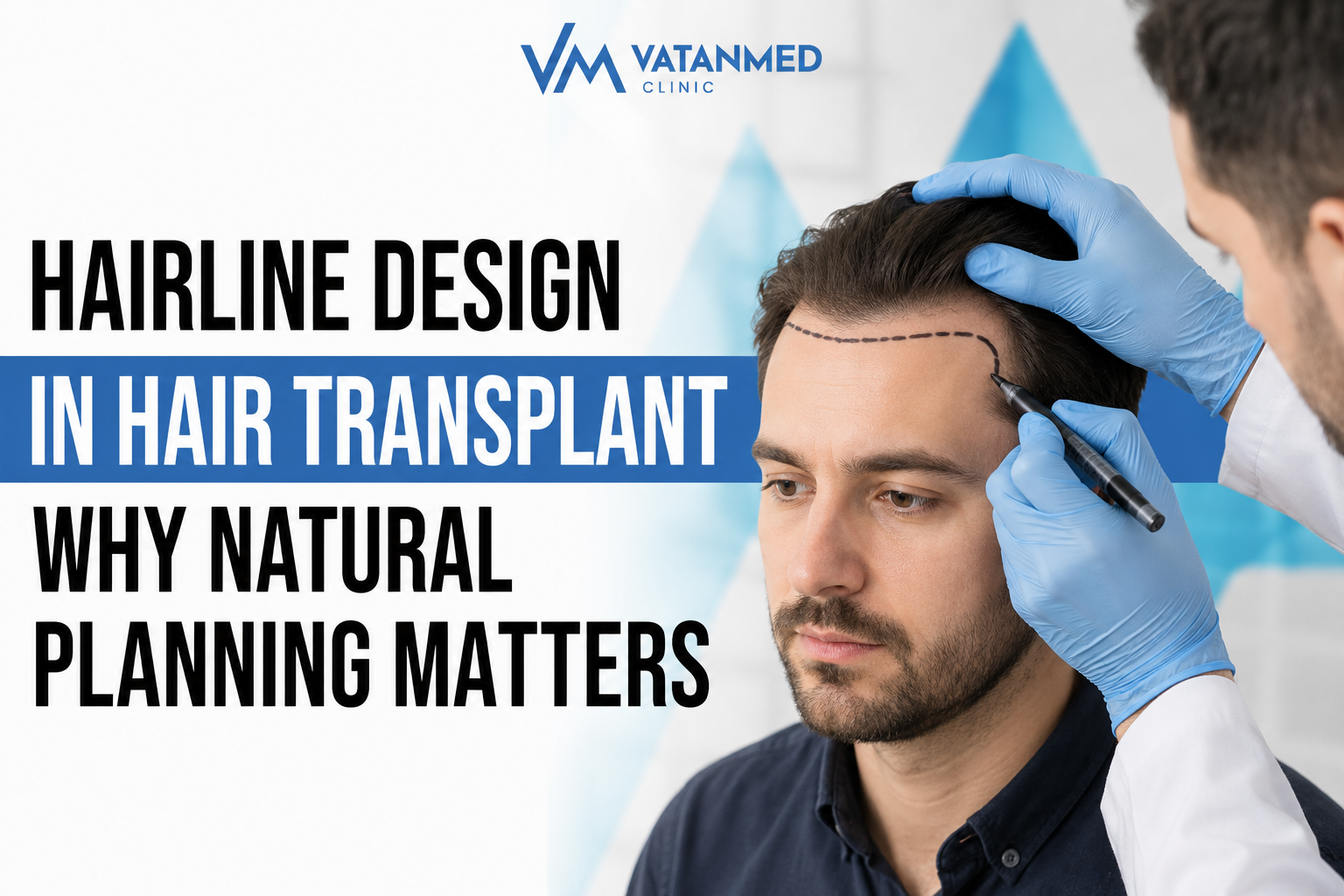
Hairline design is one of the most important parts of a successful hair transplant. For many patients, the hairline is the area they care about most because it frames the face and strongly affects appearance. A well-designed hairline can look natural, age-appropriate and balanced. A poorly designed hairline can look artificial, even if many grafts are used.
A natural hair transplant result is not only about density. It is about design, direction, proportion and long-term planning. The hairline must match the patient’s face, age, donor area, hair type and future hair loss risk. This is why hairline planning should never be rushed or treated as a simple drawing on the scalp.
At VatanMed, hairline design is part of the consultation and treatment planning process. Patients can learn more about VatanMed hair transplant services here: https://vatanmed.com/hair-transplant/.
This guide explains why hairline design matters, what makes a hairline look natural, what patients should avoid, and why professional assessment is essential before treatment.
Why Hairline Design Matters So Much
The hairline is the most visible part of many hair transplant results. It affects how the face is framed, how old or young a patient appears, and how natural the final outcome looks. Even small design errors can be noticeable.
A natural hairline should not look like a straight line. Natural hairlines usually have slight irregularity, soft transitions and careful density changes. They also vary from person to person.
Hairline design must consider:
Age
Face shape
Forehead height
Hair loss pattern
Donor area strength
Hair thickness
Hair direction
Future hair loss risk
Patient expectations
A hairline that looks attractive immediately after surgery may not be suitable long-term if it is too low, too dense or too aggressive for the patient’s donor area.
What Makes a Hairline Look Natural?
A natural-looking hairline usually has softness, irregularity and correct placement. The front edge should not look harsh or plug-like. Single-hair grafts are often used at the front to create a more delicate transition.
A natural hairline usually includes:
Soft front transition
Slight irregularity
Age-appropriate position
Correct angle and direction
Proper density behind the hairline
Good temple balance
Realistic donor use
Long-term planning
The American Academy of Dermatology explains that hair loss treatment should begin by identifying the cause of hair loss. You can read more from AAD here: https://www.aad.org/public/diseases/hair-loss/treatment/diagnosis-treat. This matters because hairline design should only be planned after understanding the patient’s type and pattern of hair loss.
Why a Very Low Hairline Is Not Always Best
Many patients want the lowest possible hairline because they associate it with youth. However, a very low hairline is not always the best choice. In some cases, it can look unnatural as the patient ages. It can also require many grafts, using donor hair that may be needed later.
A mature, balanced hairline often looks more natural than an overly low one. The goal should not be to copy a teenage hairline. The goal should be to create a result that fits the patient’s face now and remains appropriate in the future.
This is especially important for younger patients whose hair loss may continue. If too many grafts are used at the front too early, there may be fewer grafts available for future thinning areas.
How Face Shape Affects Hairline Design
Face shape plays an important role in hairline planning. A hairline should harmonise with the patient’s natural facial structure. The same design will not suit everyone.
Factors that may be considered include:
Forehead height
Facial width
Temple shape
Jawline structure
Age
Existing hair direction
Natural growth pattern
For some patients, a slightly rounded hairline may look natural. For others, a more mature shape may be better. The design should not be copied from another patient’s before-and-after photo.
Patients can contact VatanMed for a personalised assessment here: https://vatanmed.com/contact-us/.
How Donor Area Limits Hairline Planning
The donor area provides the grafts used during transplantation. Because donor hair is limited, it must be used wisely. A hairline that is too low or too dense may require a large number of grafts.
If the donor area is strong, the clinic may have more flexibility. If donor hair is limited, the hairline should be planned more conservatively. A responsible clinic should not design a hairline that the donor area cannot support.
The NHS explains that a hair transplant moves hair to an area that is thin or bald and advises patients to check the experience and qualifications of the practitioner. You can read the NHS guide here: https://www.nhs.uk/tests-and-treatments/cosmetic-procedures/cosmetic-surgery/hair-transplant/.
Good hairline design must balance the patient’s desired look with the reality of available donor hair.
Hair Direction and Angle: Small Details With Big Impact
Hair direction and angle are essential for natural results. Natural hair does not grow straight out from the scalp in the same direction everywhere. Hair direction changes across the hairline, temples, mid-scalp and crown.
If grafts are placed at the wrong angle, the result may look unnatural even if the density is good. Correct angle and direction help the transplanted hair blend with existing hair.
This is why hairline work requires precision. It is not only about filling a line with grafts. It is about recreating the natural behaviour of hair.
Why Single-Hair Grafts Are Important at the Hairline
The front hairline usually requires single-hair grafts because they create a softer edge. Multi-hair grafts placed at the very front can look thick, plug-like or unnatural.
A natural-looking design often uses single-hair grafts at the front and gradually increases density behind the hairline. This creates a more realistic transition from forehead to hair.
Good graft selection and placement are important parts of the technical plan. The clinic should not only count grafts; it should also decide where different graft types should be placed.
Hairline Design for Receding Temples
Receding temples are one of the most common reasons patients consider a hair transplant. Temple restoration must be handled carefully because the temples strongly affect facial balance.
Overly aggressive temple closure can look unnatural. A natural temple design should match the patient’s age, face shape and existing hair. It should also consider future hair loss.
Patients often ask for a sharp, straight hairline, but natural male hairlines usually have shape, movement and some recession. The goal should be improvement, not artificial perfection.
Hairline Design for Women
Women may also seek hairline restoration, especially after traction alopecia, naturally high hairline, thinning or previous hair loss. Female hairline design may differ from male hairline design and requires careful assessment.
Female hair loss can also have different causes, including hormonal factors, medical conditions, iron deficiency, thyroid issues, traction from hairstyles or genetic thinning. Diagnosis is important before planning surgery.
The British Association of Dermatologists provides patient information on female pattern hair loss here: https://www.bad.org.uk/pils/hair-loss-female-pattern-androgenetic-alopecia.
Some women may be suitable for transplantation, while others may need medical treatment or further assessment first.
Hairline Design and Future Hair Loss
A hair transplant does not stop future hair loss in native, non-transplanted hair. This is one of the most important reasons hairline design must consider long-term planning.
If the hairline is restored but the hair behind it continues to thin, the result may require further treatment later. A responsible plan should protect donor reserves and avoid using too many grafts in one area without considering future needs.
This is especially important for young patients with early hair loss. The clinic may recommend a more conservative hairline to preserve a natural appearance as the patient ages.
Common Hairline Design Mistakes
Patients should be aware of common mistakes before choosing a clinic.
These include:
Hairline placed too low
Hairline drawn too straight
Too much density at the very front
Wrong graft angle
Multi-hair grafts placed at the front edge
Poor temple design
Ignoring future hair loss
Using too many grafts too early
Copying another patient’s hairline
Not assessing the donor area properly
The International Society of Hair Restoration Surgery provides patient education and safety information about hair restoration. You can visit ISHRS here: https://ishrs.org/.
How VatanMed Approaches Hairline Planning
At VatanMed, hairline planning is part of a wider assessment. The aim is to design a result that suits the patient’s face, donor area, hair type and long-term expectations.
The planning process may include:
Reviewing the hair loss pattern
Assessing the donor area
Discussing patient expectations
Planning hairline height and shape
Considering age and future hair loss
Choosing a suitable technique
Explaining recovery and growth timeline
Providing aftercare guidance
Patients can explore VatanMed clinic locations here: https://vatanmed.com/branches/.
Sapphire FUE, DHI and Hairline Design
Both Sapphire FUE and DHI may be discussed for hairline work depending on the patient. The technique should support precise placement, natural angle and careful density planning.
However, technique alone does not create a natural hairline. The design must be correct first. The best technique cannot fully correct poor planning.
Patients should ask why a specific method is recommended for their hairline, not only what the method is called.
The American Society of Plastic Surgeons provides patient information about hair transplant recovery here: https://www.plasticsurgery.org/cosmetic-procedures/hair-transplantation-and-restoration/recovery. This is useful because hairline results also take time to mature after treatment.
What Patients Should Ask Before Hairline Surgery
Before agreeing to a hairline transplant, patients should ask clear questions.
Useful questions include:
Is this hairline suitable for my age and face shape?
Will this design still look natural in the future?
How many grafts will the hairline need?
Will enough donor hair remain for future needs?
Will single-hair grafts be used at the front?
How will the temples be designed?
What density is realistic?
Which technique is recommended and why?
How long will recovery and growth take?
What result can I realistically expect?
Patients can also review general information through the VatanMed FAQ page here: https://vatanmed.com/frequently-asked-questions/.
Why Before-and-After Photos Should Be Judged Carefully
Before-and-after photos can help patients understand possible results, but they should be viewed carefully. Lighting, hair length, styling, angles and time after surgery can change how results appear.
Patients should look for:
Similar hair loss patterns
Clear lighting
Natural hairline shape
Donor area appearance
Long-term results
Realistic density
Multiple angles
No excessive styling tricks
The best comparison is not always the most dramatic result. It is the result that looks natural and appropriate for the patient.
Frequently Asked Questions
Why is hairline design important in a hair transplant?
Hairline design is important because it frames the face and strongly affects how natural the result looks. A poorly planned hairline can look artificial even if many grafts are used.
What makes a hairline look natural?
A natural hairline usually has softness, slight irregularity, correct angle, age-appropriate placement and careful use of single-hair grafts at the front.
Can I choose my own hairline?
Patients can discuss their preferred look, but the final design should be based on face shape, age, donor area, hair type and future hair loss risk.
Is a low hairline always better?
No. A very low hairline may look unnatural as the patient ages and may use too many grafts. A mature, balanced hairline is often more natural long-term.
Does hairline design differ for men and women?
Yes. Male and female hairlines often differ in shape, density and pattern. Female hairline restoration also requires careful diagnosis of the cause of hair loss.
How long does it take to see the final hairline result?
Early growth may begin after a few months, but visible improvement usually develops gradually. Many patients see clearer results around 6–12 months, with continued maturation possible after that.
Final Thoughts
Hairline design is one of the most important parts of a natural hair transplant. It should never be rushed, copied from another patient or planned only around a low position. A good hairline must suit the patient’s face, age, hair type, donor area and long-term hair loss risk.
The best result is not always the lowest or densest hairline. It is the one that looks natural, balanced and realistic over time.
If you are considering hairline restoration, contact VatanMed for a personalised consultation and treatment plan: https://vatanmed.com/contact-us/.